How Michael Yonkers Transformed Jim Blaha’s Playing Forever
Artist: I Will Die In This Jean Jacket, Michael Yonkers
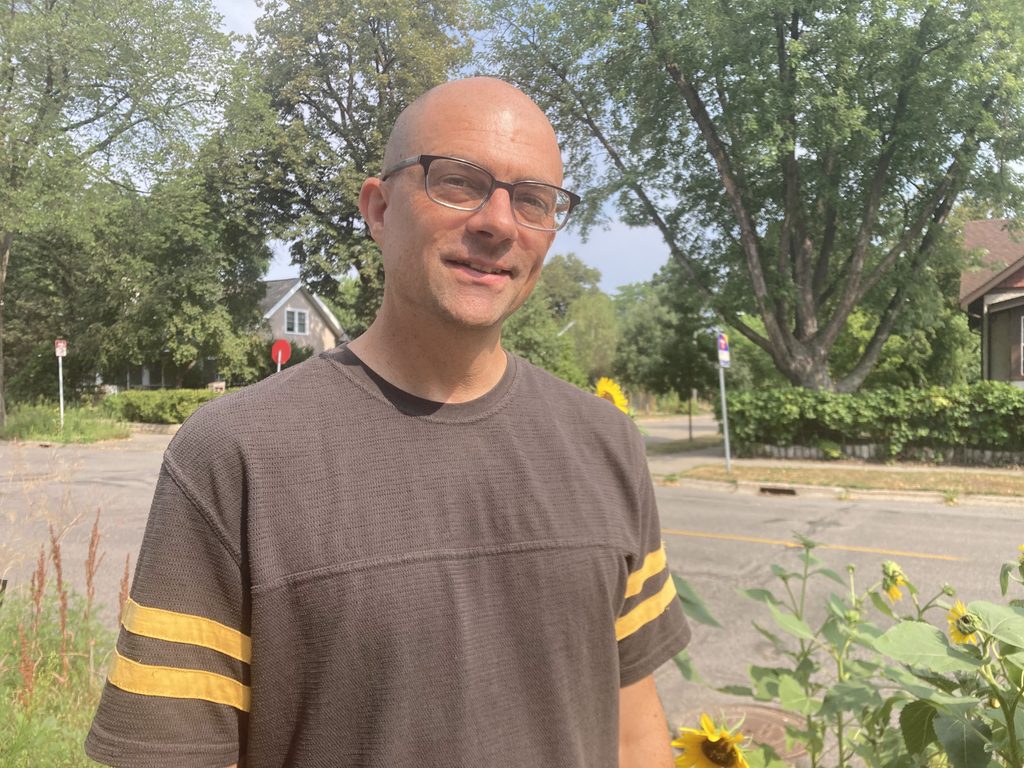
I Will Die In This Jean Jacket—whose new LP Hang From a Cloud on Swami Records dropped in late August—is the alter ego of Minneapolis guitarist, singer, and multi-instrumentalist Jim Blaha (The Blind Shake, Jim and the French Vanilla, Green/Blue). The venerable media outlet Forced Exposure (from whom you can order the LP here) compares Blaha’s latest work to, on one hand, the well-shaped and hooksome underworld pop of The Clean, New Order, and the Go-Betweens, and on the other, to the aggressive-textured melodicism of rockers like Guided By Voices, The Jesus and Mary Chain and local boys made good Husker Du (specifically the frantic beauty of the Flip Your Wig-era, if you’re keeping score).
As an musical artist, Blaha is known for the prominent role that collaboration (Zak Sally, John Reis, etc.) plays in his creative process. In April of this year, when Minnesotan avant-garde guitarist and songwriter Michael Yonkers (born Michael Regis Yunker) passed away at the age of 78, Blaha reflected deeply on the loss of a close friendship that was also one of the most transformative artistic relationships of his life. As Blaha tells it, playing with Yonkers (whose early and innovative use of feedback has drawn comparisons to The Who, The Velvets, and Hendrix) was an experience that entirely rewired his way of hearing, playing, and writing music.
Reviler: Do you remember how you first came across Michael Yonkers’ work?
Jim Blaha: Clint from DeStijl Records put out [Yonkers’ 1968 album] Microminiature Love, and then Sub Pop reissued it. People at [south Minneapolis fixture] Treehouse Records were always talking about, and I was obviously into local music and also weird 60s garage rock, so I figured it made sense to grab that record. I took it home, and it was really otherworldly, but also grounded in something very earthy. It was like if John Lee Hooker was from Mars! I loved his guitar playing and songwriting, but I think the best thing was his voice, the way it cut through; he sounded young, but wise, and not jaded at all. There was an innocence, a freshness; he’s talking about this cynical world, but there was a feeling like things can change, or you can look at life in a new way.
Reviler: When did you first see him play?
Jim Blaha: At a Treehouse in-store, after the Sub Pop reissue of Microminiature Love: so, maybe 2003 or 2004. This is going to sound crazy, but while I was watching him this odd feeling came over me that I was going to play music with him. Now, I had no business thinking that, because at the time I could barely play guitar. This is back when The Blind Shake was just getting started, and we were totally unknown and not popular. It was so weird, but I just kept thinking ‘I’m going to play with this guy,’ which I had no right to even think! But still, there it was. Anyway, I became a fan, and later went to see him open for the A-Frames at Grumpy’s downtown. When they played, I noticed he had these little springs in the backs of his shoes. I guess it was for his back, but I’d never seen anything like it, and I told my brother [Mike Blaha] about it. Well, one day, Mike’s walking around downtown St. Paul, and he saw a guy with springs in his shoes and he just asks the guy “are you Michael Yonkers?” It was him! They talked, and my brother told him we were playing a show at Big V’s, or maybe it was the Turf Club. Anyway, Yonkers actually came to see us, and even better, he liked us. Whoa!
Reviler: And how did you end up playing with him?
Jim Blaha: This was 2006: [Promoter and booker] Ryan O’Rourke had a birthday show, and it was us [The Blind Shake] and Michael Yonkers, and Ryan asked Michael if he would do a live collaboration with us. Yonkers said yes, and we started emailing with him. The day of the show he said ‘I have a song we could jam’, so he came to our rehearsal space before the show.
Reviler: What was it like?
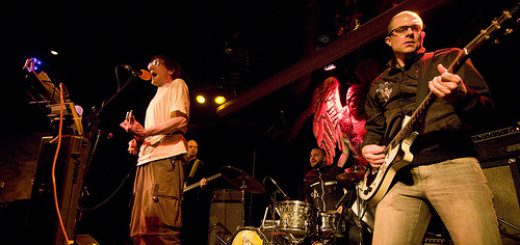
It was like the first day of school and the first day of summer, all rolled into one. My god, I was so nervous. But Michael was very fun, and sweet, and welcoming of ideas. It was his riff, but he was open to us taking it anywhere. Jamming with him was something else. He has so many effects on that it’s hard to pin down what’s happening, so we had him strum his parts clean while we learned them. We figured it out, and later that night, we played the show. Michael loves these old fashioned ‘showbiz’ moves, so he wanted our collaboration to be a surprise. So, once he finished his set, Michael started playing that riff. Our gear was set up right behind his, so we decided to surprise people by going up unannounced. As he’s playing, I completely forgot my riff and what key it was in. My brother had to sing my riff to me. “What key is it?” I was panicking. “It’s in D, I think”, he shrugged. I was so nervous as I went up on stage, plugged in, and started playing. People were looking at me like “Jim, what the fuck are you doing?” And rightly so! But they didn’t know. Then my brother gets up and starts playing bass. Then our drummer comes up, and when the beat dropped, Michael had this big smile on his face. We were almost laughing out loud, it was so much fun; just this bluesy, groovy thing. I didn’t want it to end, it was so great. We still had to play our set after that, but we kind of wanted to just end the night right there. It was that good! A week later, Michael emailed us and said ‘let’s do an album.’
Reviler: What was it like working musically with him?
Jim Blaha: Oh, everything changed for us once we started playing with him. Like a lot of great musicians, Michael had this ‘less is more’ perspective. Some songs might be just one riff, but they still have a feeling of escalation and progression, which could come from something like a small change in his vocal delivery. When we started The Blind Shake, every song had to have three or four different parts, almost like legos stuck together. But he showed us that a groove can carry the whole thing, and it felt more welcoming and fun like that. Pretty soon we started to feel like we didn’t need to kick pedals on for the chorus, and it’d just be a crime to throw a bunch of extra stuff onto a song for no reason. Maybe you could say we became less square and more circular.
Reviler: Did it help that they were Michael’s songs, and the three of you were there to support him?
Jim Blaha: Definitely, because there was no question who the leader was. In a band, you sometimes have these little ego issues about who brought a part in, and who has say about how the song is put together. You have to worry about not stepping on people’s toes. But Michael was the head chef because the songs were his, and we knew how lucky we were to work with him and learn from him.
Reviler: How did working with him change you as a musician?
Jim Blaha: You know, I don’t think Michael had an ego at all. He was so positive, and so happy to work with other artists. And he had so many different styles through the years, but the through line is that he let his music evolve with his life. To him, music wasn’t just a cool thing to do in your twenties, it was a way to live your whole life, a way to explore. He inspires me, because I’m getting older now, and I think about how I want to make music as a way of living. Not just being a ‘punk musician’, but also thinking like a painter, like an artist. Why can’t a punk musician play like a painter? If Michael had an idea, he’d take it all the way; the music was woven into his life. I also want to say that first and foremost, he was my friend. I never thought that would happen. I still listen to Microminiature Love, and it’s so amazing, and I think ‘how did I even get to play with him? How did we become friends?’ I just shake my head, like ‘how is this my life’? Even now, I feel really uplifted every time I think about him.
On Friday, October 2nd, Midwestern Social Research (MSR) will conclude its 2026 ‘Yonkers Summer’ retrospective with the release of the long-lost full video of Michael Yonkers’ 2005 set at Minneapolis’ legendary Heliotrope Festival (Heliotrope II). The concert, and all the individual songs, can be experienced at the MSR YouTube page.