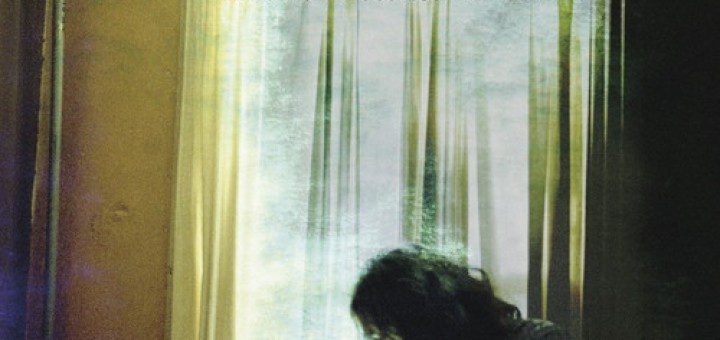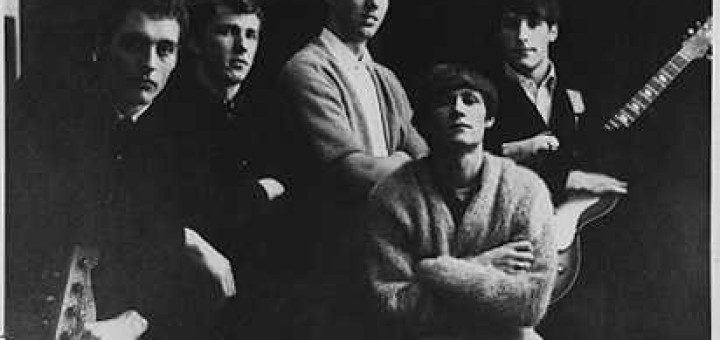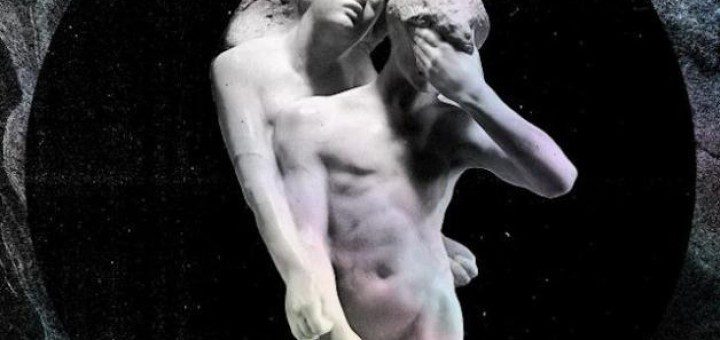

It can be difficult to gain a balanced perspective on an album after reading a single summary of the music. Bias can tilt a review, as can personal taste, history and just about everything else that is unique to the person writing it. So in an effort to offer an expanded perspective in such a medium, here are Two reactions, Two impressions, Two Takes on The End of That by Plants and Animals.
Jeremy Hovda
65/100
The End of That is not as bad as some critics would have you believe, but compared to the brilliance of their first two albums, it’s certainly a disappointment. Contrast this album’s slow, characterless opener “Before” to the explosive anthem “By Bye Bye” that opened their debut Parc Avenue or the restrained-yet-intense cool of “Tom Cruz” that opened their sophomore La La Land, and you have the difference. This album wanders from song to song without ever cohering, and while it has a few strong tracks—“Song for Love” stands out—it doesn’t pack the punch of the previous albums. It feels disjointed, rushed, and directionless.
It gives me no pleasure to tell you any of this because Parc Avenue and La La Land are two of my favorite albums of the last five years. In addition, they seem to be chronically underrated. It’s a shame that more people haven’t caught on to this band. However, I don’t imagine that this album will do anything to help with that. They’ll be playing the 7th Street Entry next week, while much lesser bands headline the Mainroom. And while I’ll certainly be there to see them, here’s hoping they go heavy on the back catalog.
Josh
72/100
When I heard “Lightshow,” the first song released from the new Plants and Animals LP The End of That, I had a brief moment of hope that the band might possibly reach the heights they achieved on their amazing debut LP Parc Avenue. Unfortunately, after digesting the 11 song LP multiple times and enjoying it to a certain extent, the record simply doesn’t hold a candle to their earlier work. The band clearly are talented songwriters, shown by the excellent “Lightshow,” but The End of That seems to continue the trend of distilling their sound to a more easily digestible version. Songs like album opener “Before” lack the creativity that made Parc Avenue so great, while songs like the piano driven track “No Idea” and the twangy (and cheesy) title track could attract a wider audience, but simply feel hollow compared with song like “Bye Bye Bye”and “New Kind of Love.” Where their work took unsuspecting turns and they had long, meandering songs that had room to grow on their debut, there are only two tracks on The End of That that stretch beyond five minutes. I will admit if The End of That was credited to a band I had never heard of, I would have given it a higher score. Is it fair that I am basing my score on how this album compares to their debut record? Maybe not, but when a band makes such a strong initial impression, it is hard to ever really not take that into consideration. The End of That is another very solid record, which feels like a let down when it comes from a band that I desperately want to create another amazing record.
It can be difficult to gain a balanced perspective on an album after reading a single summary of the music. Bias can tilt a review, as can personal taste, history and just about everything else that is unique to the person writing it. So in an effort to offer an expanded perspective in such a medium, here are Four reactions, Four impressions, Four Takes on Ekstasis by Julia Holter.

Erica K (Oaks)
70/100
Julia Holter is a force of experimental, hippie scholar rock. The tracks on Ekstasis bring out the light in her exposed self-consciousness. Apparent sadness rests just below the surface on track after track of acid jazz sound-clouds and panting mantras. “Goddess Eyes 2,” the most simplistic and beautiful track, beats you up with a chorus of swelling voices that floods into stripped-down drum machine beats. At times this record feels overindulgent, but it’s apparent that the artist made a record to heal herself. It’s worth delving deeper into Ekstasis. Like swimming farther into waters, if only to find out what kind of weird shit goes on in the deep end.
Matt Linden
On her second full-length album, Ekstasis, Julia Holter crafted another collection of expansive and ambitious atmospheric pop songs that showcases both her vocal ability and meticulous song craft. Breaking the 6-minute mark on many songs, she never holds back on her far-reaching ideas and instead lets them fade in and out. They blossom into crackling, floating soundscapes. It’s easy to compare Holter’s ethereal music to that of Julianna Barwick, but where Barwick uses only her vocal loops to create a booming, unfamiliar atmosphere, Holter delivers something more insular and direct. While many acts are emerging in the same space-y, toiling pop vein—Grimes, Frankie Rose, Nite Jewel, to name a few—Holter feels like the most overtly obsessive with her overall delivery.
Above all else, this album is patient. When the songs often come to a virtual stand-still, every new blip or vocal whip feels exactly in place. From the twinkling “Goddess Eyes II” to the more straightforward pop of ”In The Same Room,” she is able to cram many, many ideas into the space of only nine songs. In the end, Ekstasis feels like the work of true love and long labor, meticulous in design and thoroughly thought-out in delivery. Holter has stated that her main objective is to create and release music that is not forced, rushed, or shallow, and this record certainly isn’t any of those.
90/100
Jon Jon Scott (Sound Verite)
80/100
Los Angeles’ Julia Holter makes ambient rock with shades of electronica and singer-songwriter fare: part arty dissonance, part ethereal minimalism, and hidden charm in a few spaces. Holter makes, at first glance experimental bedroom music, but it’s a bit more complicated than that. Like her mates Nite Jewel, Grimes, and Julianna Barwick, this new woman-centric sound finds itself wrapped in various colors and sonics and unafraid to add some flavor to indie rocks sameness, perhaps in a different way than the boys before them. They’re not confined to indie rock rules, although they employ them. It’s art for art’s-sake, like “yo watch me do this trick” . . . with an actual song behind it.
Ekstasis opens with the baroque “Marienbad” a mournful ballad laced in esoteric vocal arrangements. The record’s rewarding, emotional centerpiece, “In The Same Room,” holds actual hints of rhythm and surprising hooks. At one point she sings, “I can’t recall his face, but I want to remember.” “Boy In The Moon” is an 8-minute droning exercise before she states, “This plane is taking off.” It surely is: to Deep Space Nine. She goes soft-goth on “Goddess Eyes II” and Kate Bush on “Four Gardens,” a track with a fantastic flourish of medieval chants and melodies as Holter asks, “will you come home, will you come home with me?” Ekstasis closes appropriately with a pretentious 9-minute gallop of free-jazz and a bit of self-importance on “This Is Ekstasis.”
Ekstasis is full of dreamy Cocteau Twins mystique. There’s potential all over the place. Holter strikes me as an artist’s artist; this record won’t threaten Bon Iver, but will place her in a new lane. Holter does have a few accessible moments here, like on “In The Same Room” and “Four Gardens” where she clearly shows great ideas. To put it another way: Laurie Anderson will be impressed. Holter is clearly a new voice, and takes on welcomed exploratory roads that will have us wondering what’s next for the young, talented heroine.
It can be difficult to gain a balanced perspective on an album after reading a single summary of the music. Bias can tilt a review, as can personal taste, history and just about everything else that is unique to the person writing it. So in an effort to offer an expanded perspective in such a medium, here are Three reactions, Three impressions, Three Takes on Mr. M by Lambchop.
Ryan O’Leary
80/10
Mr. M is subtly mischievous. And very patient. Gone are Lambchop’s familiar alt-country arrangements, replaced instead by droning vamps and orchestral strings. Frontman Kurt Wagner has dedicated this album to the passing of Vic Chestnutt, and its funereal pace is fitting for such. However, Wagner accompanies these graceful tracks with remarkable irony and imagery. On “Nice Without Mercy,” people snapping pictures with mobile phones are juxtaposed against others carrying buckets of water over mountains and the “pastoral splendor” of catching fish. In “The Good Life,” Wagner contemplates “the good life is wasted on me” while advising, “it’s not what you make, it’s what you earn”.
The two-song, 14-minute sprawl of “Gone Tomorrow” into “Mr. Met” is some of the best music to come out this year—upbeat, sparse, and a little drunk. It’s a lounge-singing grandfather waxing prolific about “the last night on the continent” where “the wine tasted like sunshine in the basement” before transitioning into a sobering choral finish. This is not an album to throw on at a party; it’s too delicate. It’s a lonely afternoon.
Mr. M takes more than one listen to really appreciate. I admit to laughing out loud at the piano accents on “Gar” upon first listen. But there’s an honesty that few other bands have here, a vividly real experience like sipping fresh lemonade or sitting on a dock, and the listen is remarkably rewarding.
Jeremy Hovda
92/10
Mr. M is Kurt Wagner’s first full-length under the Lambchop moniker since 2008’s Oh (Ohio) and the first since the death of his friend and collaborator Vic Chesnutt, to whom the album is dedicated. In several recent interviews, Wagner has attributed the unusually long wait for the LP (Lambchop previously had released an album almost every year since their1994 debut I Hope You’re Sitting Down) to the unexpected passing of Chesnutt on Christmas Day 2009. Chesnutt had been one of Wagner’s earliest supporters, inviting him and his band to collaborate on 1998’s The Salesman and the Bernadette, back in the days when Wagner was doing carpentry to pay for his music habit and long before Lambchop had gained any kind of mainstream recognition.
Yet if the album is inspired by Chesnutt, you’d be hard-pressed to find where it is about him, or even about friendship or loss or human mortality. It seems that his memory is more the occasion than the topic of Mr. M, (in roughly the way that 2008 swing-state politics was the occasion for Oh (Ohio) or the 37th president the occasion for Nixon). In fact, most of the songs on Mr. M would be at home on any Lambchop record of the last decade. The evocative ambiguity of the lyrics, the hushed country-lounge piano, the classical string backing, the languid tempo, and the playful beauty of Wagner’s cigarette-damaged baritone are all hallmarks of the band’s unique sound. Mr. M feels less like a tribute album than like the natural expansion of the gorgeous body of work that Wagner has been crafting steadily since the late ’90s. Mr. M doesn’t break any new ground, but with a sound so perfectly developed, that’s probably a good thing. And in the end, if the references to Chesnutt are oblique at best, the dark beauty of this album serves as a fitting tribute to his life and work.
Ali Elabbady (Background Noise Crew, Egypto Knuckles)
84/100
On Lambchop’s 11th album, the band delivers one of their finest releases by using some quite unconventional methods. There’s orchestral virtuosity matched with Americana-esque backdrops, especially on such tracks as “Gar.” Violins sweep magically through the beginning of “Mr. Met.” However, there are occasions where Kurt Wagner’s vocals don’t exactly mesh with the arrangements, rather they stumble-the-fuck-in and initially sound jarring. Then the vocals, along with the arrangements, manage to swirl into Mr. M’s aesthetic genius. And maybe that’s the takeaway of Mr. M: That a throat-grabber of an album can suck you in with light, airy, and wonderfully arranged compositions. Wagner’s vocals are the fragile yet interesting bond that glues it all together and brings it home.
It can be difficult to gain a balanced perspective on an album after reading a single summary of the music. Bias can tilt a review, as can personal taste, history and just about everything else that is unique to the person writing it. So in an effort to offer an expanded perspective in such a medium, here are Three reactions, Three impressions, Three Takes on Old Ideas by Leonard Cohen.
Jeremy Hovda
90/10
There is something absurd about evaluating a Leonard Cohen album. The work is too singular. There are so few points of comparison with other artists in popular music. Is it good? Compared to what? Compared to the other septuagenarian Jewish-Canadian Buddhist monks who publish in the New Yorker while selling out world tours doing “folk” music? He’s definitely in that Top Ten.
Thematically and lyrically, Old Ideas is right line with the albums that built his legend in the late ’60s and early ’70s. Sonically, much less so. The beauty of those early albums was in the simplicity of Cohen’s weathered sing-speaking against spare acoustic guitar. That voice, now deeper and more roughened by age, would be even better served by the old formula. Instead, he opts for a full band with horns, electric bass, synth, archilaud, and wispy female backing vocals (which sometimes come off as a bit cheesy). The result is very close to his recent live shows.
If you were lucky enough to see his mesmerizing, three-hour performance at the Orpheum in 2009 or the filmed London show from the same tour, you know that the full band works well on stage. However, on a recording it works less well. The smooth jazz-style horns and the electric bass sound retrograde, and one can’t help but wish he would have had the guiding hand of a Rick Rubin to strip it all down à la Johnny Cash’s American Recordings.
That said, the album is a stunner. Cohen may be 77, but he’s at the top of his game. Lyrically, he has no peers. Once again, all of the big biblical themes are explored—love, hate, lust, sin, forgiveness, redemption, and, most of all, death. Each is examined from different angles and in different moods, sounding at times hopeful (“Going Home”) and others despairing (“Darkness”). Like his earlier albums, it bears many listens and will only get better with age. So if you only buy one album from someone your grandpa’s age this year, make it this one.
Jon
78/100
Despite his legendary status, I am not very familiar with Leonard Cohen’s work. I am completely clueless as to what he has been up to basically since 1998’s I’m Your Man. Staying active, it appears.
His newest record, Old Ideas, will be his third released in the 21st century. And speaking of active—despite getting old, Cohen still sounds like he’s getting around. Even if he’s now touched by the wisdom of age, to hear him sing about love, sex, and poetry . . . well, he still has the passion of a young man. Despite some instrumental changes over the years, Cohen is still singing in the same rhyme patterns and gravelly baritone croon. I don’t like that he’s often accompanied on Old Ideas by a chipper female accompaniment, but that hardly distracts from Cohen’s gravitas. For the most part I can ignore the cheesy window dressing and concentrate solely on Cohen and his carefully chosen words. I would have preferred that he just recorded the record unaccompanied by anything save the wear and tear of years gone by. But he doesn’t appear to be slowing down anytime soon, so he’s still got plenty of time for an album like that.
Tim (Vernon Wayne)
83/10
Leonard Cohen comes at you with the softest lyrical hammer on Old Ideas. Tracks like “Amen” display a careful and gentle arrangement that are at times reminiscent of the somberness of “Nobody Home” from Pink Floyd’s The Wall. This album feels more personal than that, though. “Crazy to Love You” has the mystique of a French noir film, but wouldn’t feel out of place soundtracking shots of an aged, sad-looking Bill Murray dressed in strange clothes in a Wes Anderson film. Despite this, these songs don’t feel like characterizations, but a window into Cohen’s own somber, reverent life. What we see here is a musician showing his age, but wearing it as a badge of honor.
There are points in the album, which is full of down-tempo gospel and blues-inspired folk, in which the instrumentation becomes less important that Leonard’s hypnotizing voice. It has as much character as a gnarled oak tree, but is delivered with the tenderness of a lover. Tracks like “Lullaby” float the listener down a river on a makeshift raft with a harmonica: the music pushing the album forward, Leonard stepping in only to steer you along.
Fans of Toms Waits’ quirkiness (sans circus side-show, plus cathedral gospel choir) will have a lot to look for in this record. Some songs are more up than others, others more down. But front to back, Leonard Cohen offers a deep experience to the listener. Put this record on when you want to relax, zone out, be sad, contemplate, or just sit down and listen to a story from grandpa.
It can be difficult to gain a balanced perspective on an album after reading a single summary of the music. Bias can tilt a review, as can personal taste, history and just about everything else that is unique to the person writing it. So in an effort to offer an expanded perspective in such a medium, here are three reactions, three impressions, three Takes on Visions by Grimes.
Jon Jon Scott (Sound Verite)
80/10
Montreal’s 23-year-old Claire Boucher is a self-styled producer, artist, and remixer. She left Vancouver for Montreal to attend McGill University and studied philosophy and neurobiology before discovering GarageBand. In 2010, she dropped out of McGill with two records. Newly signed to 4AD, Grimes delivers with Visions, a run-through of electronica stylings and pop sensibilities. While some of her early work may have suggested the gothic charm of Fever Ray, here on Visions, her sound is broader.
“Infinite Without Fulfillment” rides swinging, jagged percussion. The bouncy, synth-driven lullaby of “Genesis” has the singer’s signature high-pitched, arty vocals on top of a driving beat. Boucher’s girl pop vocals are in full-effect with ooh oohs and la la las on the romper “Oblivion”, where she pleads “I need someone now to look into my eyes and tell me girl you know you gotta watch your health.” She gives us cryptic glimmers of Prince’s “When Doves Cry” with “Color Of Moonlight,” and goes mod-disco on “Visiting Statue,” which is colored in more girl pop shades. Boucher’s vocals are chameleon and distinctive, an effect that works on songs like “Visiting Statue.” “Vowels=space and time” is aided by snappy drum machine march. Boucher’s experimental R&B vocals shine on “Skin,” where she does her best Aaliyah with a careful falsetto and stutter beat.
It’s interesting how Boucher describes her music as “post-internet,” because her music is all internet-driven. Visions’ soft electro-art rock makes like this year’s tUnE-YarDs: a breakout female artist unabashedly incorporating all that is relevant in 2012. Visions takes up a perfect space between to Poliça’s downbeat Give You The Ghost and the quirky pop of tUnE-YarDs playful w h o k i l l.
Jon (Reviler)
74/100
This record is a little chirpy for my tastes. As far as looped, dreamy female vocals go, I’ll take Julianna Barwick’s moody elegance over Grimes’ squeaky energy any day of the week. Still, upon hearing Grimes debut Visions, I understand what people seem to like about it: It’s complex, well-constructed dance music. It may sound to me like a band fronted by a 13-year-old anime character/chipmunk . . . but one who obviously knows what she is doing. I’m actually surprised to find that I enjoy tracks like “Genesis” and “Eight,” if only for their great beats and production value. Maybe someday I’ll come around and get into the voice, but I think it’s going to take some time. Maybe it’s the fact that the two records I have had on lately are this one and Leonard Cohen’s Old Ideas. If there was ever an antithesis to Cohen’s new album, Grimes’ Visions would surely be it.
Sage (Cedar Cultural Center)
65/100
Visions is Grimes’ first proper full-length release, though her songs and impending hipness have been swimming around the internet for months. And while I don’t normally find value in genre names like “grave wave” or “witch house,” when describing this album they are surprisingly apt. A recent study claims that modern parents feel classic fairy tales are too scary for their children. On Visions, Grimes takes it upon herself to prevent the darkness of these children’s tales from going anywhere—even if she has to play all the parts herself.
And she does. The woman behind Grimes, 23-year-old Claire Boucher, takes a bedazzled hammer of electronics and keyboard and pounds simple, catchy beats into your brain. These are layered with dreamy arpeggios, “oohs,” “ahhs,” and other sounds from outer space. But when she coos “oh baby” it’s no more compelling than when anyone else does. Paired with her baby-doll falsetto, I can’t seem to fully get past that.
It may no longer be a valid critique to say an artist’s album doesn’t play like a cohesive whole. But if an album doesn’t have a strong linear flow, why have an intro and an outro? In this case it delays a strong start and belabors an already drawn-out ending with songs that are only partially formed.
Visions also feels top heavy. The catchiest, most danceable tracks (“Genesis,” “Oblivion,” and “Eight”) are clumped together in the first 12 minutes of the album. Much of the rest feels like filler. The last full track is the exception. ‘Skin” builds over the course of six minutes, and shows the influence of Lykke Li, with whom Grimes toured last year.
“Skin” also demonstrates what I want more of on future Grimes recordings: depth, complexity, and more vocal range. I hope the falsetto is a phase. When you catch a glimpse of Boucher’s real voice, it’s deeper and darker, more PJ Harvey than pop princess. I didn’t think Visions was earth shattering, but it grabbed me enough that I’ll stick around to see what happens next.
It can be difficult to gain a balanced perspective on an album after reading a single summary of the music. Bias can tilt a review, as can personal taste, history and just about everything else that is unique to the person writing it. So in an effort to offer an expanded perspective in such a medium, here are three reactions, three impressions, three Takes on Six Cups of Rebel by Lindstrøm.
Will (Reviler, @willwlizlo)
14.286/100
If you divide 100 by seven, you get 14.286. If you divide Lindstrøm’s latest album, Six Cups of Rebel, by seven, you get one solid dance song. “Call Me Anytime”—a nine-minute track nestled in the middle of six other hyper-repetitive, unsexy, itchingly fast house cuts—is consistently surprising considering the genre in which the Norwegian producer has decided to work. Synths evoking wonky horns, strident piano, and exotic flutes lend “Call Me Anytime” a Roxy Music-esque freakout vibe that morphs into a blast-beat-punctured jazz track—ultimately ending on a tropicalia chill. Think of an Orbital tune, if Orbital reinterpreted the soundtrack to Castlevania.
The infectious grooves and dynamic flourishes that make “Call Me Anytime” so good are lacking from the rest of Six Cups of Rebel. The other tracks zoom past like weird, pseudo-psychedelic trains. They’re loud and loaded with just enough weird vocal samples to make a fan of The Books wonder why they’ve never listened to dance music. Opener “No Release” uses organ tones in a way that will make you want to run out of church on Sunday. “De Javu” revels in low-end grooves that embarrassingly rumble like your stomach after huevos rancheros. Channeling the Blue Man Group (or something), “Magik” features the swip-swips samples of someone whipping a piece of plastic through the air. I could go on, but I think it’s kind of pointless. If you want to hear some funky space disco that uses repetition, retro synth, and brassy atmospherics very well, look no further than Lindstrøm’s partner in crime: Prins Thomas.
Jon (Reviler)
78/100
I admire electronic composer Lindstrøm’s new album more than I “like” it. Through seven tracks (why not call it Seven Cups?), Lindstrøm is adventurously creates unconventional song structures. Tunes like “Magick” and “Hina” are free-flowing and weird techno-journeys that warp a normally structured genre into organic colors and shapes. Call it electronic jazz if you will—Lindstrøm frees himself from the tyranny of a cohesive beat and journeys down the rabbit hole heedlessly. On one hand, it makes for an intriguing, even amazing, listen. On the other, Lindstrøm’s abandonment of conventional format makes his sound lacks accessibility. It’s technically dazzling music that (at least for me anyway) doesn’t hold much purely aesthetic appeal. Do I enjoy listening to it? Sure. But unless I’m in the mood to delve wholly into the album in my sensory deprivation chamber, I’ll probably choose something else.
Josh (Reviler)
I’ve patiently waited for a follow-up from Norwegian producer Lindstrøm comparable to his excellent 2008 LP Where You Go I Go Too, yet I’m consistently disappointed. His work since hasn’t been bad, but it hasn’t lived up to the euphoric, head-in-the-clouds electronic revelry that burst through the speakers on Where You Go. After some good, but not great, collaborations with fellow producer Prins Thomas and sultry voiced chanteuse Christabelle, Lindstrøm returns with a second full-lengt, Six Cups of Rebel. Unfortunately, like the collaborative follow-ups, this record spends more time wobbling around the edges than reaching dance floor nirvana. The material ranges from the cheesy stomper “Quiet Place to Live” to the church organ tapestry of “No Release,” which lives up to its name by never giving the listener any semblance of resolution. Lindstrøm comes closest to his previous magic on the frantic, everything-and-the-kitchen-sink “De Javu” and the wandering, mystical space funk of “Call Me Anytime”—a track that leaves no stone unturned in its quest to mine every sound known to man.
It’s feels like Lindstrøm either isn’t capable of or doesn’t want to replicate the rapturous space disco (as it is often called) of Where You Go I Go To. I suppose I shouldn’t go into each release expecting Lindstrøm to reinvent his own wheel, but I also can’t mask my disappointment when he doesn’t even come close.
It can be difficult to gain a balanced perspective on an album after reading a single summary of the music. Bias can tilt a review, as can personal taste, history and just about everything else that is unique to the person writing it. So in an effort to offer an expanded perspective in such a medium, here are Three reactions, Three impressions, Three Takes on Lava Bangers by Doomtree producer Lazerbeak.
Jon Behm (Reviler)
79/100
I was initially a bit skeptical to hear that Doomtree producer Lazerbeak was putting out a solo instrumental record so close on the heels of both No Kings as well as crew-mate Sims’ Bad Time Zoo. Both of those records featured some terrific beats from the young producer, and conventional wisdom would imply that Beak’s “best” was tapped for those two projects, that whatever was leftover could only be the stuff that didn’t make the cut. Surprisingly, though, Lava Bangers is far from a collection of also-rans.
Listening to the record, it seems likely that none of this stuff was produced with the end goal of retrofitting for a Doomtree rap joint. Somewhat like RJD2’s Deadringer (with which Lava Bangers shares a few similarities), the album’s twenty tracks play more like a maestro’s orchestra rather than a collection of discarded rap beats. The overarching aesthetic seems to be one of epic bombast—track after track pounds the senses with high volume beats and distorted samples. While there are a few moments of respite, the record heavily loaded with “bangers,” as the record’s name clearly states.
Where Lazerbeak’s production skills really show are in the intricately molded dynamics within each individual track. They may come together to form a bludgeoning stomper, but each element belies the mark of a delicate hand. Asiatic flutes, for example, might not have a great deal of business in a club banger on their own. In Lazerbeak’s hands, though, they are expertly folded into the mix. He’s a micro-musician working on a macro scale, and the results are often spectacular.
Josh Keller (Reviler)
76/100
Following up his 2010 solo LP, Legend Recognize Legend, Lazerbeak is back with a new instrumental LP. Fans of Beak, and the Doomtree collective in general, know that he hasn’t been sitting around drinking mojitos on the beach during the break, as he was all over the Sims breakthrough Bad Time Zoo and the recently released crew LP No Kings. Somehow he still found time to collect the 20 songs on his latest offering to the world, Lava Bangers (out now on Doomtree Records).
With so much new material, I wondered going into Lava Bangers if the release would feel a bit like a retread and not stand shoulder to shoulder with his recent (very good) work. Unfortunately, it seems this is the case. Is this saying that Lava Bangers isn’t good and doesn’t contain some downright jams? No. But is it the album I would send someone new to Lazerbeak? Again, no. There are definite highlights—including the confident, horn-laden strut from “LRL” into “Bully” and the buzzing “Smash Hit”—but many of the songs feel like shells building towards the final steps of completion. I said last week when reviewing the new Silky Johnson beat tape that I appreciate beat tapes that are standalone documents, not skeleton tracks lumped together, either waiting for or stripped of vocals. There some great beats collected on Lava Bangers’ 20 tracks, showing without a doubt that Lazerbeak is incredibly talented and has an ear for hard-hitting jams. I would just argue that they would be better served delivered in a different fashion.
Ali Elabbady (Background Noise Crew, Egypto Knuckles)
89/100
On “Legend Recognize Legend,” we got to see the remnants of Beak’s pop-memories mixed with a hip-hop sensibility. It’s safe to say things are different, that his production is a mainstay in the local scene. After delivering the production on Sims’s Bad Time Zoo, we get Lava Bangers, which is largely a collection of Beak’s finest beats that for some reason or another never saw the light of day. Lava Bangers stays true to his moniker for his beats. We get those same bomb-squad influenced drums mixed with different instrumental textures that keep the pop influence evident. Lava Bangers plays a lot like Madlib’s “Beat Konducta” series, in the sense that the blends are seamless and straight-forward—a body of work to be taken as a whole rather than in small doses.
Lazerbeak “Smash Hit” by doomtree
In the Twin Cities, Poliça is currently the slickest thing since green-painted bike lanes. The group—comprised of music community veterans Channy Leaneagh, Drew Christopherson, Ben Ivascu, and Chris Bierden—has rocketed in popularity in the half year or so they have been playing together, which culminated in a sold-out Valentine’s Day album release show for their debut, Give You the Ghost. Very impressive.
These types of mega-events tend to warrant some pandering to the impressionable crowd. (Us included. Who doesn’t love a happy dose of sentimental emotional manipulation?) Thus, the tasteful cover song.
We asked members of the local music community to share the songs they’d like to hear Channy and company cover during the big show.
Of course, we also want to know what songs you’d like to hear Poliça cover—so leave your suggestions in the comment box.
(Here is a Spotify playlist of most of the songs on the list—listen while you read: Reviler.org presents 50 Songs That Poliça Should Cover. Also, you read our review of Give You the Ghost and listen to a couple of songs off of the album.)
Jon Schober (The Current)
Captain & Tennille – “Love Will Keep Us Together”
Replace the clanky keyboard sounds, slow it down by half, auto-tune it all, and have the guys “do-do” the backup vocals. You’ll see what I mean.
Holy Fuck – “SHT MTN”
The new rendition would be a little softer with Channy’s blipped spelling of “H-O-L-Y-F-U-C-K.” I imagine the live performance of this getting violent.
A Place To Bury Strangers – “To Fix the Gash In Your Head”
“I want to take you down,” “Kick Your Head In,” “I’ll make you feel my sorrow.” ’Nough said. Channy would then need to jump from five stacked monitors and blow the power in the venue (which is what happened when I saw these guys in Texas).
Josh Keller (Reviler)
Brian Eno – “And Then So Clear”
I wanted to choose “This,” the album opener from the 2005’s Another Day on Earth, but the warped vocal shenanigans of “And Then So Clear” just fits too closely with the sound Poliça is creating to ignore. I probably could fill this whole list with Brian Eno songs they should cover. (. . . Maybe Turf Club New Year’s Eve cover show 2012?)
Peter and the Wolf – “Safe Travels”
A song that I love that probably would have been a better fit for Channy’s time with Roma di Luna. The hushed melody and plaintive lyrics would, in my estimation, sound great painted with a lush electronic brush and sung, preferably sans vocal whitewash, in Channy’s songbird vocals.
John Maus – “Hey Moon”/“Believer”/“Cop Killer”/“Keep Pushing On”
Any of these songs from Maus’s standout 2011 LP We Must Become the Pitiless Censors of Ourselves would fit into the musical style of the band, and I think both could take on a whole new dynamic when you substitute Maus’s madman baritone with Channy’s much more serene vocal styling.
Games – “Strawberry Skies”
This song was my top track of 2010 and found the band (now called Ford & Lopatin) creating a slinky electro-pop that breathes funky life into a chilly genre. Laurel Halo’s vocal turn on this track is a stone cold classic, but I am fairly certain Channy could pull it off.
Pure X – “Easy”
Another song that matches well with the band’s aesthetic. Pure X have been one of the best atmospheric pop groups over the last few years, and this song—one of the best they have released—would be a really good fit.
Zoe Prinds-Flash (Site)
Michael Jackson – “Thriller”
The Replacements – “We’re Coming Out”
Blackstreet – “No Diggity”
69 Boyz – “Tootsie Roll”
Relevant video:
Sage Dahlen (Cedar Cultural Center)
Low – “Little Argument with Myself”
Maybe the reason it is so hard for this fellow to count stars is because they’re wandering…
Soundgarden – “Black Hole Sun”
To replace the D’Angelo version that I would like to remove from my consciousness forever.
Gotye – “Somebody That I Used to Know”
It might just be me, but I think this seductive/sad tune could really work with Channy’s croon and some auto-tune.
A-Ha – “Take On Me”
Self ’splanatory.
Jon Behm (Reviler)
David Lynch – “Good Day Today”
While “Pinky’s Dream” might be the more obvious Lynch choice, considering it features female vocals (Karen O’s), but I think that “Good Day Today” sounds more like a Poliça song. In fact it wouldn’t take a whole lot of imagination to pretend that this song is actually Lynch covering Poliça.
Janelle Monae – “Sir Greendown”
This is a sweetly beautiful song that I would love to hear Poliça take in a darker, grittier direction. The dreamy synths could easily take on a colder, more ominous tone, and Channy’s vocals would fit it perfectly. It is a post-apocalyptic robot love song after all, so why not make it sound more like one?
The Specials – “Gangster”
This would be a pretty adventurous cover for the band, and I am all for bands stepping out of their comfort zone once in awhile (don’t look at number four). I would love to hear what the band could do with this moody, dark post-punk-cum-reggae classic.
Portishead – “Silence”
This one almost seems too obvious. The rhythm plays a huge part in this song, and I have no doubt that Ben Ivascu and Drew Christopherson could take it in some interesting directions with the twin drumming. And of course Channy as Beth Gibbons is pretty much a given. I would LOVE to hear this cover live and see the band have some fun with it.
Lekar Hum Deewana Dil – “Yaado Ki Baraat”
OK, I just want some band, any band, to cover this Bollywood classic and do a frame by frame remake of this video. I figure Poliça could get Mike Noyce involved again on guitar and if maybe Channy wouldn’t mind learning Hindi, then I think this could be a hit. Too much to ask?
First Runner-Up: Any Broadcast song, really. But maybe “Pendulum,” if I had to choose. Another one to file under “obvious,” but one of my favorite bands that I think would make excellent candidates for a Poliça cover. Better than, say Kate Bush, who everyone covers, or Björk, whose uniqueness I don’t think lends itself to covers well.
Certificate for Participation: Smog – “Justice Aversion”
Just thought of this one and want to tack it onto the end. Why not?
Ali Elabbady (Background Noise Crew, Egypto Knuckles)
David Sylvian – “Red Guitar”
Channy could pull off a great rendition of Sylvian’s wonderful vocals on this original cut. Not to mention the fact that Sylvian was also part of a defunct band prior to going solo.
Kanye West – “Coldest Winter”
Given Channy’s newfound love of auto-tune (plus the band’s tight rhythmic structure, like on “I See My Mother”), this wouldn’t be a bad idea.
Radiohead – “Knives Out”
The almost bossa nova-like arrangement of “Violent Games” would match this Radiohead song perfectly. Plus, given a voice as powerful as Yorke, Channy could pull this one off rather well.
A-Ha – “Take On Me”
Most of Give You the Ghost, from a musical standpoint, reminded me of a lot of the music I grew up listening to in the ’80s, and I think the band would be able to pull this cover off without a hitch.
The Jets – “Crush On You”
Could totally be done. Although a far stretch of the imagination, “Fist Teeth Money” sounds rhythmically akin to this Jets track. Plus, it’s not a bad shout-out to MPLS, right?
Dana Raidt (METRO Magazine)
Al Green – “Here I Am (Come and Take Me)”
While under normal circumstances I would never encourage vocoder-y effects to be introduced into an Al Green masterpiece (blasphemy!), the vulnerability and subdued nature of this song would be perfect for Channy, and I would be curious to hear what the rest of the band does with the horn part.
Cat Power – “He War”
Channy has a, well, Chan-y voice and is one of the only singers I know of who could do a Chan Marshall song justice. The drums really carry it, so the two-drummer situation would only enhance that.
Danzig – “Soul on Fire”
I’d love to see Poliça take on something a little evil, and this seems like a good place to start—this or Sabbath.
George Harrison – “My Sweet Lord”
There’s a lot of slow buildup to an epic, layered chorus, and a band like Poliça could do amazing things with that dynamic.
Cocteau Twins – “Alas Dies Laughing”
Channy is probably one of the few people who could even begin to get Elizabeth Fraser’s weird phrasing and mumbly affect right, and the sparseness of the song fits the rest of the band perfectly.
Harley Brown (Consequence of Sound)
Aaliyah – “Don’t Know What To Tell Ya”
Aaliyah’s sultry vocals and Timbaland’s bumpin’ beats fit Channy Leneagh’s exchanges with quick-fingered bassist Chris Bierden like her “lock and [her] key.”
James Blake – “I Never Learnt To Share”
This song’s heartbreakingly lonely lyrics reflect Leneagh’s own songwriting, and dueling drummers would destroy Blake’s slow-building crescendo.
Al Green – “Love And Happiness”
After seeing Poliça soundcheck to Ace of Base, it’s clear they’ve got a playful side. And what’s better for that than Al Green’s groovy soul-searching?
Will Wlizlo (Reviler, @willwlizlo)
David Bowie – “Ashes to Ashes”
Bowie is the undisputed Queen Diva of Space-Funk. Poliça could do an honorable and faithful tribute to Mr. Stardust and Mjr. Tom. (Substitute for the young ‘uns: “Modern Love” or “Suffragette City.”)
Big K.R.I.T. – “The Vent”
This ambient-backed rap song is unironically ready to be covered by an electronic band. The lyrical content focuses on the anxieties of loss, success, and introspection—just like Poliça’s debut album.
Depeche Mode – “Policy of Truth”
The last song of disenchanted heartbreak that ever needed to be written. It should help keep Valentine’s Day in perspective.
Fiona Apple – “Better Version of Me”
I’m an unashamed Fiona Apple fanboy, and I’d argue Channy’s singing style is modeled after Apple’s (or greatly influenced by it). Replace the grungy guitar with synth muscle and the wonky percussion with dual drumming. Voila!
Tortoise – “The Lithium Stiffs”
I like the idea of a group that puts vocals front-and-center covering an instrumental song. Granted, there’s a voxy synth sample in this It’s All Around You-era Tortoise cut, but it would lend ample room for the rest of the band to jam like it’s 2004. (Substitute for the young ‘uns: “Angel Echoes (Caribou remix)” by Four Tet.)
Ryan O’Leary
Bruce Springsteen – “Born to Run”
The lyrics “Just wrap your legs around these velvet rims and strap your hands across my engines” must be paired with Drew Christopherson and Ben Ivascu’s attacks.
Talking Heads – “Once in a Lifetime”
Channy could definitely pull off a sultry David Byrne.
Iggy Pop – “The Passenger”
It would work, trust me. Plus, Channy looks a lot like a late seventies Iggy.
Ginuwine – “Ride my Pony”
Straight-up sex attack that would make the boring music journalists littering the crowd get nastay.
It can be difficult to gain a balanced perspective on an album after reading a single summary of the music. Bias can tilt a review, as can personal taste, history and just about everything else that is unique to the person writing it. So in an effort to offer an expanded perspective in such a medium, here are Four reactions, Four impressions, Four Takes on Give You The Ghost by Poliça.
Jon Behm, Reviler
80/100
The Twin Cities hype machine is a pretty strange beast, but at least lately I gotta say that I am not at odds with it nearly as much as I like to pretend to be. I mean, I am of the opinion that the various current local kings and queens of The Scene are, in most cases, deserving of their crowns. Bands like The Cloak Ox and Doomtree for instance, two bands that had very good years in 2011. Sure, we still overlook bands (Brute Heart, Food Pyramid, Lighted, Skoal Kodiak, etc., etc.), but at least most of the bands we have been honing in on lately aren’t completely terrible (with notable exceptions like Howler). And with the current most-hyped local darling, Polica, I also gotta say that I think we got another one right. While the contrarian in me wants to tell Poliça’s sold out crowds that there are plenty of other great local bands they should also line up to see, the other part of me is lining up right there with them.
Now, with me at least, Poliça did have an unfair advantage, because I have always been a big fan of Channy’s vocals. Whether folk, country, or new wave—Channy always manages to make it sound both amazing and effortless. While the vocal effects on the band’s new record warp and distort her voice into a colder, more distant warble, Channy’s talent is still evident in the richness of tone and pitch that the computer cannot mask. The effects don’t always work—in “The Maker” the reverb leaves the vocals a bit harried and directionless—as if the tracks were pinging around in a well. Mostly though, they are completely on point. The vocals carry the otherwise unremarkable “Form” completely. And in great tracks like “Amongster” and “Wandering Star,” the auto-tune and echo effects seem like a perfect combination. They also serve to muddle-up the lyrics and make them a bit harder to understand—which is a plus because there isn’t anything incredibly profound being said. I don’t think the lyrics are meant to be profound—Channy’s words seem to come from a dark inner place and, though sung, they almost seem to be more like the mutterings of a tormented person.
But let’s not solely consider Channy’s contribution. Poliça also features a very strong cast of musicians who are every bit as integral to the sound. Ryan Olsen’s production sounds quite a bit similar to what he did with Gayngs: smooth, silky tones and reverb that cushion everything in a barbiturate cloud. The Dual drummers Ben Ivanscu and Drew Christopherson are highly in-tune with each other’s vibes, and in tunes like “Amongster” it’s interesting just to listen to the two of them roll across the scope of the song like a violent hailstorm. Bassist Chris Bierden stands out the most in “Leading to Death,” where his nimble fingers give the rhythm a much-needed slice of funk. Guest Mike Noyce’s impression isn’t as noticeable—he only contributes (vocals?) to two tracks (“Wandering Star” and “Lay Your Cards Out”).
What’s remarkable about Poliça as a group is how finely in-tune with each other they appear to be, which seems unusual for such a new project. However each of these band members is a local music veteran, and many of them have been collaborating on other projects for years (Gayngs, Marijuana Deathsquads). It should be no surprise that they sound as good as they do. And they do sound good: every single ticket holder who sold out the band’s upcoming First Avenue performance is right about that much. They are one of many great bands that make up our local scene—and I think all the hype being sent their way is pretty well deserved.
Will Wlizlo, Reviler, @willwlizlo
40/100
Channy Leaneagh has come a long way from busking fiddle at farmers markets. Having won over the collective, sentimental heart of the Twin Cities as the lead female vocalist of folky ensemble Roma di Luna, Channy and her former partner Alexie Casselle pulled the plug on the project after more than half a decade. The two have moved on to pursue other projects. Alexie is returning much of his focus to his twin hip-hop projects, Kill the Vultures and Crescent Moon is in Big Trouble. Channy, as you might have heard if you’ve had half as much sensory capacity as Joe Bonham in Johnny Got His Gun, has started a little band called Poliça.
Poliça is an aesthetic about-face for Channy, who dropped the neo-rustic roots rock and songbird vocals of Roma di Luna for synthesizer riffs and an auto-tuner. She’s backed up by a trio of local vets: Ben Ivascu of STNNNG on drums; Vampire Hands’ Chris Bierden on bass; and every-other-Minneapolis-band’s honorary member Drew Christopherson, also on drums and electronics. Bon Iver member Mike Noyce appears on a pair of tracks. On top of all that, Give You the Ghost was produced by Gayngs-kingpin Ryan Olsen and one of the dudes from Spoon. From a sheer-firepower perspective, Poliça is a juggernaut.
From a finished-product perspective, though, the band leaves plenty to be desired. This is not meant as a snipe-job, but the element of GYTG I’m least impressed by is Channy’s vocal work. What made her performances with Roma di Luna so memorable was a sort of delicateness—that she could so finely manipulate her intonation and delivery to evoke a wide range of emotions and switch between styles. Auto-tune and delay effects, unfortunately, steamroll her naturally robust, intricate voice. As she belts out repetitive lyrics, Channy sounds caged by the digital manipulation—her wings clipped. On tracks like “Amongster” and “Leading to Death,” the melodies lack human emotion, like they’re anonymous samples from a ‘90s trance compilation.
As the vocals suffer, so do the lyrics. Many of Channy’s lines seem like she lifted them off the angsty pages of her high-school diary. Here are a few offending groaners. On “I See My Mother,” she sings with a young Conor Oberst-esque kicked-puppy sentiment, “I swallow whiskey, I take to powder, drink the flowers, but I am still so so sad, and that makes you feel bad.” Feeling like a gothling that no one understands? Listen to “Form,” on which Channy sings “Wish you would kick me in my face, I’m the victim I did it.” “I need some time to think about my life without you,” she croons on another song. I think Lisa Loeb just filed a suit for identity theft.
Lyrics don’t always need to be literary—in certain circumstances, the more vapid the better—but when vocals are front-and-center, they should at least break away from cliché. Channy is one of few artists legitimately experimenting with the artistic limits auto-tune, and for that she deserves credit. But I want a little harder push. Votel is another local group working in this vein (And, surprise!, also features Drew Christopherson.) But in my opinion, Votel does it more successfully and less predictably.
Not to be a complete crank, I admit there are some standout excellent moments on GYTG. Poliça have a great sense for balance and flow. The album’s mix masterfully juxtaposes the low, jammy grooves of the band and Channy’s rocketing voice. “Lay Your Cards Out” and “Fist Teeth Money” are positively immersive, dunking the listener in a cold, electronic ocean. “Dark Star” is my favorite track; it starts with a wonky disco beat and becomes increasingly complex and surprising as the song wears on. What’s more, Channy overcomes the clipping limitations imposed by the vocal effects. Live, I’m sure I’d have to fight tooth-and-nail to avoid embarrassing myself on the dance floor.
There’s a sense of drive on the debut album, but a type of drive more akin to a pack of teenagers doing donuts in a high school parking lot at 3 a.m. The songs are circular, and it seems like the only way they can coax an emotional response out of me is by increasing the tempo and volume. That could mean I’m a cold-hearted bastard; it could also mean that something positively fundamental is missing.
Poliça draw elements from Portishead, the Eurthymics, and, weirdly, Fleetwood Mac. But as far as the band aesthetically distances itself from Roma di Luna, the corpse of Channy’s former group will still bang on the floor like a Minnesotan Tell-Tale Heart. Going forward, the best way for Poliça to give up their history’s ghost might be to reason with it—and honor its memory.
Josh, Reviler
78/100
I fully expected that the debut album from Minneapolis (super) group Poliça would be something I wouldn’t like, a record destined for the dust pile because of its relation to the Gayngs/Bon Iver/“effect laden vocals and chilled out pop” sound that permeates the scene surrounding those two bands. I am happy to say that I went in with an open mind and left impressed with Give You the Ghost, the group’s debut record (out now digitally and dropping on wax on local label Totally Gross National Product on Feb 14th).
Fronted by the ethereal vocal stylings of Channy Leaneagh (Roma di Luna) and put together by local sound-wizard Ryan Olsen, the record is a moody slab of buzzing electronic pop music. It’s all held together by the dual drums of Drew Christopherson and Ben Ivascu and the rich bass lines of Chris Bierden (he of Vampire Hands fame). Despite having pipes that most of us in the local scene have come to recognize as something special, Leaneagh’s vocals are no more than a layer in the sound, so warped with effects that they simply become another cog in the machine. Which is disappointing. Despite the fact that what should be the highlight of the record is in fact buried under a tsunami of effects, the record still finds a way to succeed in a cool way.
Highlights on the 11 song, 45-minute effort include the thumping “I See My Mother,” the galloping space funk of “Dark Star,” and the soulful, neo-R&B of “Lay Your Cards Right.” The formula gets tired at points, namely the overdone and faux dramatic slush of “The Maker,” but it’s a well-produced record (the songs mesh together excellently) and is brimming with talent—even if it isn’t always used in the way I would have thought best. Despite my reservations that the record was going to be a hollow Gayngs/Bon Iver retread, it actually finds a way to feel less formulaic and needlessly overdone as the latest records from those two bands. More than likely it’s going to find the group some big time success.
© 2012. All Rights Reserved. Created by Zerge for themeforest.net