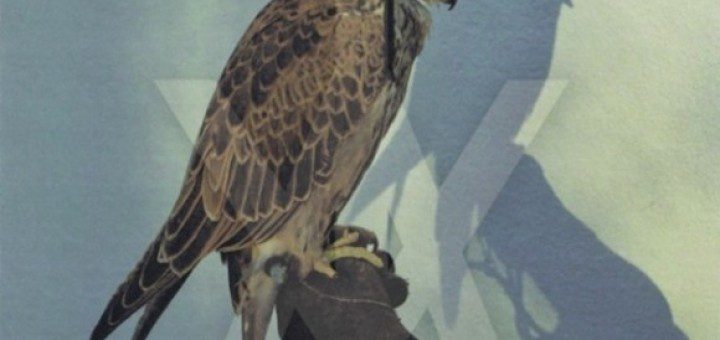
It can be difficult to gain a balanced perspective on an album after reading a single summary of the music. Bias can tilt a review, as can personal taste, history and just about everything else that is unique to the person writing it. So in an effort to offer an expanded perspective in such a medium, here are Four reactions, Four impressions, Four Takes on undun by The Roots.
Michael Herriges (Midwest Broadcast)
85/100
Undun is a heavy album. If you’re not familiar with the concept already, it tells the story of the undoing of a semi-fictional drug dealer named Redford Stephens in reverse, starting with his death and progressing through everything that lead up to it. It seems to be an album that you love or think is just okay. I love it.
The reason I love it is because it’s the most meticulously crafted rap album released in years. It’s incredibly down-tempo for a rap album. The grooves unwind slowly, matching the narrative at hand. The instrumental codas come off as a little self-indulgent. After becoming familiar with the album, I found myself skipping them.
That leaves the listener with about 32 minutes worth of rap. And not a minute is wasted. Black Thought’s lyrical attention to detail is exceptional. Dice Raw contributes a few excellent guest verses and choruses. Phonte’s tough talking verse on “One Time” is chock full of clever punch lines, but still contributes to character development. Big K.R.I.T.’s verse on “Make My” is a fantastic self-reflection from the eyes of the dying protagonist.
What I’m getting at is that rarely is a musical or lyrical moment wasted on Undun. ?uestlove and the Roots were able to trim all excess fat and make a concept album that’s meant to be digested in one whole, brief listen. The band is still taking risks, pushing themselves musically, and broadening the notions of what hip-hop can do and say. And they’re doing this 13 albums into their career. Few bands ever have remained as consistently excellent as The Roots. Undun is yet another crowning achievement in their long career.
Josh
92/100
You can call it a comeback, return to form, or whatever, but the latest LP undun by the Roots is a crystal clear example of how the group still has it and why they are one of the best bands in music (rap or otherwise) right now. The 14 tracks on undun are heartfelt, polished, challenging, and, even though it is a heavy concept album about the crack game and the toll it takes, a record that ultimately is really fun to listen to. Ranging from the absolute show stoppers “Make My” and “One Time” to the lush closing sequence featuring the arrangements of Sufjan Stevens, the record is as commanding and well thought out as any record I heard over the past year. The story works its way backwards from the death of the protagonist to his birth, showing how easy it is to get lost in the game when you live in a society that doesn’t offer you very many choices. For the band to have made—and pulled off—a concept album of any depth, while still making it one of the most musically rewarding records of the year, shows the amazing talent of Black Thought, Questlove, and the crew.
The Roots – UNDUN from The Ghettonerd Company, LLC on Vimeo.
Ali Elabbady (Background Noise Crew, Egypto Knuckles)
98/100
Listening to Undun, the newest and 13th album from The Roots, one picks up on an uneasy attitude. While it is a concept album that revolves around the main character, Redford, and his untimely demise, it is clear that The Roots continue to up the ante creatively, leaving no detail unsaid. Black Thought returns with an unsettling yet awesome performance as the main character, while other folks such as Dice Raw, Big K.R.I.T., Phonte, Greg Porn, and Truck North spread themselves as other characters within Redford’s forever unfolding manifesto, especially on such tracks as the stark “The OtherSide” and the blood-curdling-eeriness that is “Make My.” That’s not even mentioning that the virtuosic tail end of the record (comprised of four movements), which has Sufjan Stevens reprising a song from his Greetings From Michigan record. The Roots continue their awesome streak with Undun, which goes down as what a great concept record should sound like.
Jon Jon Scott (Sound Verite)
88/100
With the Roots, feelings run deep. They are the talented “rap-band” that is different and alternative. They’re always dependable and reliable; sometimes arty, other times jammy, just fine enough with each jump. One always wants more, hoping for the best Roots record ever with each release, which usually leaves you still wanting something new, something even more special. On undun they deliver—although it is short at 38 minutes, including the closing quartet of instrumentals.
On the hypnotic “Sleep,” the vocals “I’ve lost a lot of sleep to dreams” begins with Black Thought: “To catch a thief, who stole the soul I prayed to keep, insomniac, bad dreams got me losing sleep.” He continues, “The music played on, and told me I was meant to be awake, It’s unresolved like everything I had at stake, illegal activity controls my black symphony, orchestrated like it happened incidentally.” “Make My” features the red-hot southern rapper Big K.R.I.T.. K.R.I.T. is cool, but he ain’t saying nothing that we couldn’t hear from Black Thought. “Make My’s” mid-tempo vibe is a perfect canvas for Black Thought as he ponders if there’s such a thing as heaven. “The spirit in the sky scream homicide” opens “One Time,” with assistance from Phonte (Little Brother) and Dice Raw.
On the heavy hitter “Stomp,” ace produced by Just Blaze, The Roots find the right board dude who delivers a banger as Black Thought asks “What is it back to the essence of? Greatness, I wasn’t in the presence of” shows Black Thought in a Charlie Mingus mood, “Speaking of pieces of a man, Staring at a future in the creases of my hand, It reads like a final letter I’m leaving for my fam but, It’s written in language they will never understand.” The sterling pianos of “The OtherSide” are anchored by a beautiful melody and soul-crooner Bilal. “Listen if it not for these hood inventions, I’d just be another kid from the block with no intentions” rhymes Black Thought, as if to ask what’s the point of it all. The eighties pop stylings of “Lighthouse” shows a lighter moment, as do the smooth post neo-soul R&B of “I Remember” and the mournful ballad “Tip The Scale”.
This, their 13th record, adds up to a “concept” album of a young, lost-too-soon black male. Staying in the same reality-based “dark” lane lyrically as the past three records, Game Theory, Rising Down, and How I Got Over, undun challenges with its brooding, surreal view of the current urban landscape. The exception with undun is that most of the vocals are by Black Thought—no big guest names, really—with assists coming primarily from their home team of Dice Raw, Greg Porn, and Truck North. There’s still the strong preference for Black Thought to carry the entire the narrative.
Musically, The Roots have arrived where folks have been expecting them to go. With the album’s driving arrangements and layered production, ?uestlove reaches for the grandiosity of Radiohead’s of Kid A with the execution of Mile Davis Kind Of Blue. He goes for epic-like space on the closing quartet of “Redford (For Yia-Yia & Pappou),” “Possibility,” “Will To Power,” and “Finality.” I love the fact that the whole record clocks in under 40 minutes; the only nag perhaps is the missing closing statement from Black Thought, which would have really finished the record in fantastic fashion. The ambition and reach of undun may be the The Roots strongest statement since 1999’s brilliant Things Fall Apart and hints of their 1996 masterpiece Illadelph Halflife.
It can be difficult to gain a balanced perspective on an album after reading a single summary of the music. Bias can tilt a review, as can personal taste, history, and just about everything else that is unique to the person writing it. So in an effort to offer an expanded perspective in such a medium, here are Four reactions, Four impressions, Four Takes on the new record El Camino from Akron, Ohio blues duo The Black Keys.
Steve Skavnak (@steveskavnak)
73/100
Many years ago, before I knew a single thing about The Black Keys, I just assumed they were White Stripes wannabes. They, like Jack and Meg, were a duo, also centered their sound around “blues-rock,” and, hell, even had a similar band name (similar in the same way that my Pearl Jam-loving neighbor growing up started a band called Diamond Smash). With every release, though, Dan Auerbach and Patrick Carney have truly crafted their own defining sound, something that continues with El Camino.
El Camino highlights all of The Black Keys’ strengths. Crunchy guitars give way to splashy cymbals accompanied by pulsing organ on almost every song. It’s what you’d expect . . . safe, but not the least bit boring. Not a single track would falter on the radio, for length or commercial appeal. From the punchy hook on “Gold on the Ceiling” to the self-searching love loss of “Little Black Submarines” to the soulful falsetto-rich chorus on “Stop Stop,” you could imagine The Current overplaying every single track. Still, after ten 3-4 minute songs, I’m left wanting more. The songs are impeccably structured, but still feel a tad rigid at times. I’d love to hear just one of the songs given a 4-minute guitar interlude of the Wilco variety. The talent is there, but the exploration is absent.
The Black Keys are [currently] skipping the Twin Cities on their early 2012 tour, but don’t be surprised if Rock the Garden, SoundTown or the inaugural First Avenue festival nabs the duo to close out their respective events next summer. With Jack White too busy driving his cute little yellow van around, someone has to hold down the blues-rock fort.
Ali Elabbady (Background Noise Crew, Egypto Knuckles)
94/100
Many ask the question “how do you follow up after Brothers?” While it is a tough question to pose, the Black Keys shrug off their stellar album and follow it up with El Camino, yet another great album in their discography. For this one, the Keys, along with producer extraordinaire Danger Mouse, deliver rock that has a down-home, bluesy feel. And while it’s not as bluesy as their earlier efforts, it definitely carries the same energy as Brothers and manages to maintain a jukebox-like feel—where someone walks into a bar, orders a whiskey neat, and cues up an old 45”. You can hear it with the blood-rushing energetic jam “Lonely Boy” and the toe-tapping antics in “Gold On The Ceiling.” However, there is also nice subtlety in the acoustics of “Little Black Submarines,” and while that is the lone jam that kind of slows things down a bit, the rest of it is energetic. If you’ve ever seen the Black Keys live in concert, this record matches the energy of their live show.
Josh (Reviler)
66/100
The Black Keys allow for a good case study in the music nerd parlor game of the “popularity chicken or egg.” Does a band get to the point of playing Saturday Night Live and selling enough records to become “popular” and then go limp and create boring music, or is the boring music actually the meal ticket to the riches previously described? While trying not to be that crotchety guy in the Guided by Voices t-shirt and crusty Chuck Taylors, The Black Keys seem tailor-fit to be saddled with the “they were better and more interesting with their earlier (less popular) material” albatross. Where it seemed like guitarist Dan Auerbach and drummer Patrick Carney valued rough aesthetics and gritty blues—capped by fuzzy productions and not-quite-perfect performances—on The Big Come Up and Thickfreakness (their first two LPs), they now seem to strive for a more tailored sound. The greasy funk of “Gold on the Ceiling” doesn’t feel like a “recorded live in the studio” take, like a lot of their older material, but a polished blues-rock number. The choruses of “Stop Stop” and “Nova Baby” are especially disappointing, seemingly built to be played on the radio and stripped of the grit and feeling that made their earlier work so enjoyable. Did they write a mass consumption-bating LP like El Camino because they have tasted the fruits of being popular? Or was their fruit-tasting the byproduct of their initial willingness to scrub clean their sound and make it more appealing to a larger audience? Who knows, but either way, El Camino was a further disappointment from a band that at one point I would not have been able to see being so disappointing.
Jon (Reviler)
70/100
Sooner or later, it seems that a lot of artists get to a point in their career (if they make it that far) where they start to view their musical prerogative as “having fun” rather than “making serious art.” I am not really sure if the Black Keys ever had the serious art phase, but their new record El Camino definitely seems to be of the alternate variety. It’s a big rock party devoid of any pretense whatsoever. And like most artist’s “fun” records that come later in their career, it is correspondingly pretty forgettable. There are some fun guitar riffs, some boot-stomping rhythms, and a great deal of swagger. But most of it just doesn’t have much weight. In comparison to some of the Keys’ earlier works it at least seemed like they were trying to have their blues rock anthems taken seriously, even as recently as 2009’s Brothers. From the jokey album art right down through the mediocre tunes, El Camino just seems mailed in.
It can be difficult to gain a balanced perspective on an album after reading a single summary of the music. Bias can tilt a review, as can personal taste, history and just about everything else that is unique to the person writing it. So in an effort to offer an expanded perspective in such a medium, here are Four reactions, Four impressions, Four Takes on Bad As Me by Tom Waits.
Chris Besinger (STNNNG)
80/100
Jon Behm
75/100
I can’t believe its really been seven years since Real Gone already. How time flies. Not for Tom Waits though. Despite the years Waits seems perpetually stuck in his own time-averse version of Americana, a niche that is easily described in most contexts as “Waitsian.” If you don’t know by now what Tom Waits sounds like by now I am going to leave it for you to discover on your own. Waits’ newest record Bad As Me finds the artist once again growling and crooning over a set of brand new songs. And despite the generally universal acclaim the album has already received (as well as my own Waits fandom) I am only really into about half of the new album. Most of the first half of Bad as Me is decent but somewhat forgettable, with the possible exception of “Chicago” and definite exception of “Talking At The Same Time,” which I had to look up to make sure that, yes, that was in fact Waits singing in a spooky falsetto. The worst of the lot is “Satisfied” with its cringeworthy lyrics and “Hell Broke Luce,” which sounds like Waits made up on the spot. On the flipside I have found that Waits’ sadder side seems to improve exceptionally over time – his ballads ‘Kiss Me” and “Last leaf on the Tree” I would name as amongst his best sad sack blues joints. Overall it adds up to some exceptional, some mediocre and some in the middle. Frankly I’ll take it. Despite bad As me not really tickling me all the way through I am still just grateful that Waits is still out there making records.
Josh
82/100
Tom Waits has always been an artist that keeps you on your toes, from album to album changing his sound and always mixing and matching his first love of back alley ballads and his penchant for chain rattling, Howlin Wolf inspired folk dirges. On his latest album, Bad As Me, he changes the game from song to song, showing both his tender and introspective side and his massive, earth shaking rock and roll growl, making an unsteady but rewarding LP. Waits is tender and worn on tracks like “Talking at the Same Time,” “Face to the Highway,” “Pay Me,” “Back in the Crowd,” “New Years Eve,” “Kiss Me” and the heartbreaking lament “Last Leaf.” The other half is pure hell and brimstone Waits, lead by the raucous title track and the sinister “Hell Broke Luce.” He is joined by his friend Keith Richards on the album and you can hear his influence on the rootsy “Satisfied” and the wobbly swing of “Chicago.” A listener who is jacked up from the more upbeat material or lulled into tranquility by the slower songs will be quickly snapped back into the reality of listening to a genius chameleon like Waits. His madcat ideas are so exciting to soak in and his style, indebted to many but beholden to none, is a breath of fresh air in a world full of fakers and thieves. After waiting seven years since his last LP and then hearing the bursting waves of material so full of life, one can only hope we don’t have to wait so long for his next LP.
Adam
90/100
It’s been seven long years since we’ve last heard anything new from Tom Waits and let me tell you this: it’s been worth it. Bad As Me is 17th album from Waits and is all co-written with his wife Kathleen Brennan and features the usual cast of characters we’ve come to expect on a 90s and beyond Tom Waits record: Marc Ribot, Keith Richards, Flea, Les Claypool, etc. Where Bad As Me starts to differ is the programmed elements, samples, turntables experiments and similar have started working themselves back out of the mix into a more classic Rain Dogs era sound.
The records kicks off in a flurry of banjo and horns (not to mention Richards on guitar) with Chicago. “Raised Right Men” is pretty standard fair for a post-90s Waits, punctuated by sharp stabs of Organ. “Talking At The Same Time” is a wonderful piece of hazy jazz noir hearkening back to the Rain Dogs era which fades into the souped up Eddie Cochran rock n roll of “Get Lost”. Waits slows down on a couple of tracks as well, the accordion ballad “Pay Me” and the scratchy record sound of “Kiss Me”. We even hear Waits hitting his heaviest with the metal-esque guitars and stomp of “Hell Broke Luce”. It’s the title track however that is the standout of the entire album with a split personality set of vocals and Marc Ribot’s always fascinating guitar playing.
Bad As Me is the strongest offering we’ve seen from Tom Waits in a few albums and one of the better things I’ve heard all year. It seems that the longer we have to wait (Bone Machine to Mule Variations was the last 7 year break between albums) the better we get.
It can be difficult to gain a balanced perspective on an album after reading a single summary of the music. Bias can tilt a review, as can personal taste, history and just about everything else that is unique to the person writing it. So in an effort to offer an expanded perspective in such a medium, here are three reactions, three impressions, Three Takes on Hurry Up, We’re Dreaming by M83.
Matt Linden
There’s no contesting the fact that Anthony Gonzales’ new album Hurry Up, We’re Dreaming is a grand statement. It’s a a double-album in the truest sense: 22 songs over 72 minutes. There are flashes of full-blown pop, unwinding instrumental interludes and cascades of spacey soundscapes fans have come to know from the band. While the album is a clear display of Gonzales pushing his own conceptual boundaries, the sounds within play out like retrospective, with him not only showing his new confidence as a singer, but also making continual nods to his discography. It’s a bold move for any musician nowadays to drop the double album and it’s daunting as a listener. In a lot of ways I think the album is incredibly bogged down by its length, but it’s not without its rewards.
Luckily, Hurry Up kicks off with six excellent tracks that each feed off the energy that comes before them. Together, “Midnight City,” “New Map” “OK Pal” and “Reunion” show a more confident Gonzales stepping up and delivering some of the best and biggest vocal performances in his catalog. His voice reaches out of the synth haze that once washed over them and it becomes the main focal point. This is probably the biggest difference that longtime M83 fans will notice on the new album. And for how good all of the tracks play out, it’s kind of a shame that it took so long for him to step up and command mic. The album then drips into the kind of ambient headspace that he’s always dabbled with before coming back with the piano ballad “Splendor.” One of the better standout tracks towards the end is the head-spinning “Steve McQueen,” which will probably be a great live staple.
Now, in all honesty, I’m pretty back and forth with the record as a whole. I want to dislike it just because it’s so long and I rarely want to sit through the whole thing, but there are some tremendous songs on this album and plenty that I enjoy. And just like his other releases, there’s an abundance of wonder and nostalgia and adolescence that cast a really dream-y mood to the whole thing. In the end, though, I think this album is better, and more enjoyable, in small EP-sized doses – which it has about 4 of. What’s really impressive is that throughout the 20+ song album there aren’t as many interlude tracks as I was expecting. And many of the songs clock at 4+ minutes. It’s a real feat that Gonzales was able to realize this album for better or worse, even if some will feel like me. Props to him for seemingly doing the unthinkable: making a double album in a time when the “album” seems obsolete.
Steve Skavnak (@steveskavnak)
76/100
Maroon 5. Matchbox 20. 30 Seconds to Mars. There have been plenty of bands that have taken a giant turd on the ‘numbered’ band name. Enough so that instant skepticism shrouds my subconscious whenever any band, no matter the positivity of their past output, releases a new record under a numerical moniker.
M83’s first record since 2008’s slightly over-hyped Saturdays = Youth is a behemoth in both size and scope. The fact that Hurry Up, We’re Dreaming is double album is a bit curious, though. Over the two discs we’re given 22 songs, 6 of which clock in at under 2 minutes each, almost acting as interludes than songs themselves, and often times seeming a bit pointless & unfinished. While a good percentage of the rest of the tracks are smartly constructed and feature epic crescendos, the half-dozen shorties really seem out of place. Oh, and then there’s “Raconte-Moi Une Histoire,” a seemingly childish tale that is actually about tripping on frogs, which seems oddly ok even though a 7 year old is narrating the story.
Overall, this is a nice change of pace record. Rather than fixating on the backing sound wall, M83 expertly executes some addictive hooks that take a page from the MGMT playbook, but are obviously created more for a live setting than the album itself. Is this an album of the year contender? No. Is it even in the Top 10? Probably not. It is, however, the kind of kick-you-in-the-pants fun suitable for 6pm on a Friday, when you’re sick of the U2 & 3 Doors Down your less interesting coworkers have been streaming all week.
Ali Elabbady (Background Noise Crew, Egypto Knuckles)
90/100
You know, its become too few and far between that we get some multi-disc efforts. And maybe perhaps we have Joanna Newsom to thank, after all her last opus “Have One On Me”, sprawled over 3 discs, was surprisingly consistent for anything of a multi-disc effort. When talk arose that M83 would do the same with his newest record, Hurry Up, We’re Dreaming, many never questioned it, especially being the talented visionary that Anthony Gonzales is. Hurry Up, We’re Dreaming picks right up in creating a similar mood and feel to Saturdays = Youth, although he focuses more on the youth sound of the equation, especially after hearing the slick dance jam of the lead single “Midnight City.” Elsewhere, there’s “Reunion” which is more along the lines of XTC meets Talking Heads, whereas such interludes as “Where The Boats Go,” and “Train to Plutton,” among many others serve as great segways between the energetic tunes and the odes to the 80s new-wave, dashed in shoegaze. Without contention, Hurry Up, We’re Dreaming continues the streak that M83 has continued to ride on since he put out Dead Cities, Red Seas & Lost Ghosts. Gonzales and company have yet to make a mediocre record.
It can be difficult to gain a balanced perspective on an album after reading a single summary of the music. Bias can tilt a review, as can personal taste, history and just about everything else that is unique to the person writing it. So in an effort to offer an expanded perspective in such a medium, here are three reactions, three impressions, Three Takes on Audio, Video, Disco by Justice.
Ali Elabbady (Background Noise Crew, Egypto Knuckles)
82/100
It’s been four years since the debut album from Justice. † was an interesting record nonetheless, if not for its exercise if microsampling, then the numerous dance jams it created. “DVNO,” and “D.A.N.C.E” were just all around fun party anthems if nothing else, and their new record, Audio, Video, Disco, should come as no surprise in the natural progression of what Justice wants to create. Although this go round, as wonderful as the song structures are this go round, some of the memorable antics of what made us love Justice in the first place is a tad hard to swallow. Prog-rock, when sampled correctly at least can create some epic breakdowns, beginnings, and endings for song structure, and in this aspect, Justice does the best with what they’re given, and for the most part it works, especially when songs like “On’N'On” and “Canon (Primo)” come into play. For the most part though, Audio, Video, Disco attempts to put more structure into the prog-rock jams they’re trying to create, and while the attempts are honest, there are few occasions in which the execution sometimes comes off as half-assed, such as on “New Lands” or “Helix. Regardless, it should be interesting to see where both members of Justice are able to create after such a feat as Audio, Video, Disco.
Jon Behm
85/100
Justice’s Audio, Video, Disco isn’t one of those records that takes a lot of time to get into. From the aggressive opening of “Horsepower” onward it’s pretty evident that the record is going to be a huge hit. The French pair has shifted their sound from hyper electronic dance music to a more prog-influenced, 70’s metal/rock sound. And on top of that very electric guitar-heavy base is a sort of electronic veneer that lends the sound the sort of tinny quality of early video games. It’s a bit like if the SNES had come out with Rock Band in 1992 and then filled it with Rush and Queen songs.
The sonic shift is a good move for the band – simply going down the same road as Cross over again ran the risk of sounding stale and un-creative (despite how great that record was). The only misstep is in “Brainvision” which sounds like Justice invited Ratatat into the studio to record for them (one of the more irritating bands of recent memory).
Great bands need to keep their sound on the move to a certain extent, and that is precisely what Justice has excelled at here. What remains to be seen is how much staying power AVD will have. Since I haven’t had that much time to listen to it I am still mainly just wowed by its glossy veneer. Will it still resonate a year from now? My gut says that it will. It’s a tough call though. Despite loving “D.A.N.C.E.” (from the first record) enthusiastically for at least a year or two I am finally kind of sick of hearing it. “Civilization” is definitely AVD’s “D.A.N.C.E.” and correspondingly, I currently love it to death. I just hope the love lasts.
Josh
74/100
Earlier this year there was a fake Justice song that dropped on the internet, which sounded like a crappier version of the banging electronic jams they brought on their debut LP Cross. Fans were relieved to find out it wasn’t the band taking a step back, but I couldn’t help thinking in the back of my head as I listened to their sophomore LP Audio, Video, Disco, that the 11 song LP felt like a tired pastiche compared with the Cross. While songs like “Civilization” and “Cannon” bring that bass rattling, Daft Punk emulating synth raucous that made the band so big, most of the album feels tired and half baked. “Horsepower” feels like a paper tiger, “Brainvision” is a song that has no heart (or beat) and the title track is just outright cheesy. While Audio, Video, Disco is Justice taking a step back, you have to take into account what that means. Justice at half strength still have crisper synths and heavier beats than most bands doing what they do. While I listened to Audio, Video, Disco I couldn’t help but wishing I could keep the good songs and pretend the less stellar ones were fakes, I realized that wasn’t the case in this situation. Maybe their debut set the bar too high for me, but their sophomore effort feels like a step backwards, even if that step backwards still leaves them miles ahead of most of their peers.
.
It can be difficult to gain a balanced perspective on an album after reading a single summary of the music. Bias can tilt a review, as can personal taste, history and just about everything else that is unique to the person writing it. So in an effort to offer an expanded perspective in such a medium, here are three reactions, three impressions, Three Takes on Parallax by Atlas Sound.
Jeremy Hovda
86/100
It’s starting to seem like Bradford Cox can do no wrong. Every Deerhunter album has been stronger than the last (Halcyon Digest topped my “Best of 2010” list) and the same seems to be true for his solo side-project, Atlas Sound. Parallax, had a tall order to fill following up on 2009’s winning Logos, but it manages brilliantly. Cox once again uses the Atlas Sound moniker to explore more of his pop sensibilities, staying away from the psychedelic noise-rock elements that characterize the Deerhunter sound. This is not to say that he gives up any of the complexity. On the contrary, Parallax has an incredibly intricate and dense sound for something from a one-man pop band. Most of these tracks are built out of simple lines from an array of instruments, all layered into a contrapuntal harmony, with melodies so sad they’re happy – or so happy they’re sad. The first three tracks on this album – “The Shakes,” “Amplifiers,” and “Te Amo” – are among his best ever. And, while the album drags a bit in the middle with “Mona Lisa” (intoning the grating lyric, “the Mona Lisa has got you, oh oh), as well as with “Praying Man,” and “Doldrums,” it picks up quickly with the catchy “My Angel is Broken” and ends on a sunny note with “Lightworks.” It says everything that the kind of song that most bands spend their career trying to write, Bradford Cox throws in at the #12 spot.
79/100
Between Deerhunter and Atlas Sound, Bradford Cox keeps up such a steady stream of output that I keep thinking that sooner or later some of it is going to be terrible. So far though, Cox seems par for the course – pretty much just releasing solid effort after solid effort, sometimes sublime and sometimes just plain good. And based on a few weeks of listening to the new Atlas Sound record Parallax, I think it belongs mostly in the just “good” category. While it’s got some really great tunes (particularly towards the end – the last four songs are an excellent bloc) there are also some songs (like “Mona Lisa” and “Amplifiers”) that I like but am not in love with just for the simple fact that they don’t sweep me off my feet. I am likely setting the bar a little too high considering how much I loved the past few Deerhunter and Atlas Sound albums, but try as I might I just can’t connect with the new record the way I have done with Logos, Halcyon Digest, Microcastle, etc. A lot of Cox’s works have been slow builders for me though so ask me in a few months and I may have grown to love Parallax.
Josh
80/100
Bradford Cox is almost too talented for his own good. With his seemingly endless releases with Deerhunter and his more solo based work as Atlas Sound coming in wave after dreamy pop wave, it is hard to keep up with him. His material ranges from good to amazing, so the good material can sometimes find a way to get lost in the noise. His latest Atlas Sound LP, Parallax, is one of those “good” records. It is a quiet, contemplative record featuring minimal guitar work layered with Cox’s brittle but powerful vocals. Ranging from the really sleepy “Terra Incognita” to the somber but somewhat propulsive “Nightworks,” Parallax does what the other Atlas Sound projects have done and really highlights the intimate, cut-open-a-vein songwriting that Cox does so well. Highlights include album opener “The Shakes” and the wobbly, static filled title track. Parallax is another great effort by Cox and company and shows again why he is one of the most consistently rewarding indie songwriters around right now. Is it his best work? No. Is work that isn’t his best still probably better than 90% of people doing similar things right now? Definitely.
It can be difficult to gain a balanced perspective on an album after reading a single summary of the music. Bias can tilt a review, as can personal taste, history and just about everything else that is unique to the person writing it. So in an effort to offer an expanded perspective in such a medium, here are three reactions, three impressions, Three Takes on In the Grace of Your Love by The Rapture.
Michael Herriges (Midwest Broadcast)
83/100
The Rapture have been around for over a decade, but it seems as if the majority of that time has been spent not making music. It’s been five years since their last release. Furthermore, their history as a band has been nothing short of tumultuous, filled with interpersonal conflict between members — their one-time bassist/singer quit, and frontman Luke Jenner quit and rejoined. Despite their apparently inconsistent recording habits and lineup changes, the Rapture’s new album, In the Grace of Your Love, still successfully sounds like a Rapture album. And a good one at that.
In interviews Luke Jenner stated that he wanted to make a more positive-sounding album, so he studied gospel music and even joined a church choir. These influences are apparent throughout the album, primarily lyrically. Jenner’s songs touch on deeply personal topics — the loss of his mother and learning to be a father. This makes the album their most intimate yet, a true labor of love and mourning.
The album also continues on the path of 2006’s Pieces of the People We Love, straying further from their punk roots. Much of In the Grace of Your Love is variegated. Consecutive songs often sound like they don’t belong on the same album. The guitar driven “Blue Bird” segues right into the dance floor polka of “Come Back To Me.” The languid-psych of “Roller Coaster” transitions into the hook-driven synth-pop of “Children.” Of course there’s the absolute monster of a single “How Deep Is Your Love?”, powered by a disco piano loop and a glorious fuzzy bass line. The closer, “It Takes Time To Be A Man,” ends on a beautiful chorus of Jenner wailing “Hallelujah,” a final nod to the gospel impulse that drives much of the album.
The Rapture have grown gracefully since 2003’s Echoes. Jenner’s paranoiac wail of a voice is now more mature and melodic, but he hasn’t lost his knack for writing a great hook. The band’s signature punk sound is gone, but they still kept one foot on the dance floor. In the Grace of Your Love succeeds by showcasing the band’s new directions while still recognizing their past. It may have taken five years to get this far, but it’s good to have the Rapture back.
Ali Elabbady (CEO/Producer; Background Noise, Egypto Knuckles)
81/100
Josh (Reviler)
66/100
I am a giant DFA geek and was just about the target age when their big album Echos came out in 2003, but for whatever reason I have never fully connected with The Rapture during their heyday, and have never really caught on to their work to this day. Coming into their latest work In The Grace of Your Love pretty much neutral, I left feeling like I had just listened to the most hollow, generic indie rock album of the year. Sounding nothing like their dance floor filling DFA ilk, In the Grace of Love feels more like a less creative Yeasayer record or a less funky TV on the Radio LP pulled together will little creativity and less musical chops. From the lifeless “Miss You” to the busy but lackluster “Rollercoaster” to the hollow, cheesy faux soul funk of “Never Die Again,” the record feels like an extended test session that never delivers on any of the structural promises the genre jumping music could provide. The title track pumps a little life into the record, but for the most part each song served as an excruciating test to see if I could make it through the entire track before having to endure the next. I am starting to think I didn’t miss much back in 2003.
Catch the band Sept 26th at the Varsity Theater.
It can be difficult to gain a balanced perspective on an album after reading a single summary of the music. Bias can tilt a review, as can personal taste, history and just about everything else that is unique to the person writing it. So in an effort to offer an expanded perspective in such a medium, here are three reactions, three impressions, Three Takes on Father, Son, Holy Ghost by Girls.
Steve Skavnak (Twitter)
68 /100
“Honey Bunny” and “Alex,” the first two tracks off of Girls’ second full length, Father, Son, Holy Ghost, pick up exactly where their excellent debut (Album) left off. They’re sunny, punchy and energetic, showing that the band, which has earned plenty of divisive reviews in the past, might have some long-term promise. Unfortunately for the listener, though, the band hits their creative precipice early, and the rest of the album is just a slow tumble.
Father, Son, Holy Ghost lacks proper direction and is void of any considerable ambition. Christopher Owens often offers up a wannabe Randy Newman vocal vibe, but sounds more like what your parents hear when you’re on the phone with them and they ask if “you’re in a tunnel.” “Die” seems to have been written solely for Guitar Hero, while “Saying I Love You” sounds like a suburban high school garage band readying themselves for their big gig at prom. “Vomit” properly induces its own name; it’s a confused mess for 5 minutes until a curious crescendo brings forth over-the-top Hammond organ and forced Gospel vocal accompaniment. Thankfully later in the album, “Love, Like A River” and “Jamie Marie” bring back both the organ and backing vocals in a more appropriate manner, resulting in a couple of rare bright spots.
Above all else, Girls just seem a little bored, as if they were making the record they thought they should make, not the one they wanted to. Father, Son, Holy Ghost is an unfortunate step backwards for a buzz band on the incline, but many have tackled that obstacle in the past, and let’s hope that Girls are the most recent addition.
Jon (Reviler)
54/100
Father, Son, Holy Ghost has cemented my opinion that San Francisco’s Girls are some of the most maddeningly inconsistent indie rockers of recent memory. Their debut Album juxtaposed some really terrific singles with some less than stellar material. After that, their Broken Dreams Club EP thoroughly wowed me from start to finish. But just when I thought the band was on an upward tilt, their most recent LP seems to have set them back well behind where they started. Simply put, Father, Son, Holy Ghost leaves something to be desired. It’s full of very conventional melodies that are accentuated by the band’s recent addition of three new members (swelling from 2 to 5). The additions make for a fuller sound but one that only serves to underline the banality of the simple Beach Boys-influenced garage pop. These songs sound like they didn’t take much time or effort to construct, regardless of what “spiritual” message frontman Christopher Owen has tried to instill in them. If this sound is religious then consider me an atheist.
Zoe Prinds-Flash (site)
75/100
Though the sound is fuller, Father, Son, Holy Ghost is one of the least focused albums I’ve heard in a long time. Vocally, the band has matured– featuring a more personal look at Christopher Owens as a lead singer, however each song seems to be going in a totally different direction with nothing to tie them all together. The first two songs, “Alex,” and “Die,” are blatant imitations of other popular bands sounds’– “Alex,” sounds like it’s trying for more of an Arcade Fire sound a la The Suburbs, while I first confused “Die,” for the latest Black Mountain single.
Though the lack of structure puts me off, there are a few songs that I really dig. Owens’ voice truly is excellent, and it might be the one thing that I consistently enjoy about this band. “Jamie Marie,” where Owens voice is most excellent, won me over instantly and “Honey Bunny” is a perfect example of their Beach-Boys-esque poptastic groove, and though it borders on too corny, I still enjoy it.
The rest of the album bounces back and forth between sappy love themed songs, and plugged-in Neil Young riffs that are extremely hit or miss. The album ends with their previously released single, which I enjoy, but feel that they’re trying to stuff every different sound featured on the album and the result is a totally directionless and 6-minute song, appropriately titled, “Vomit.”
I wish the band could find one of their many successful sounds and produce something cohesive, but until then, I will spin Album endlessly and listen to a few excellent choice songs.
It can be difficult to gain a balanced perspective on an album after reading a single summary of the music. Bias can tilt a review, as can personal taste, history and just about everything else that is unique to the person writing it. So in an effort to offer an expanded perspective in such a medium, here are three reactions, three impressions, Three Takes on Wander/Wonder by Balam Acab.
Jon
78/100
I admire Balam Acab’s debut record quite a bit but also have a few issues with it which are entirely due to my own personal aesthetic. First the good: Alec Koone has created a wondrous series of atmospheric, ambient music. The record’s eclectic sounds are absolutely drenched in samples of running/dripping/splashing water that combine for a very moody, slow moving sound that is as unpredictable as it is soaked.
What I don’t care for is the vocal samples that Koone favors, which are distorted to sounding like the kind of chirpy female vocals you might hear in an anime film. I know that this shit is in fashion right now but I still can’t hear it without being turned off by the grating sense of cutesiness. I want my “witch house” to be dark and brooding but every time I hear one of these samples I think of Hello Kitty purses and the like. For me that juxtaposition doesn’t work but for most I suppose it will seem wonderful. If it wasn’t for that I would probably love this album. As it is I only just like it.
Matt Linden
90/100
People like to compartmentalize bands in music. That’s why we have absurd, useless sub-genres to keep everything in order: people want to believe that everything fits in it’s right place. And that’s why we have a fucking genre with the term “witch” in it. ”Witch house,” “Rape Gaze, “Drag” – these are all pseudonyms used to describe a form of dark, atmospheric and Gothic electronic music that begin to take shape a little over a year ago. For the most part, and truth be told, a lot of the groups coming out of said genre are crap: weak imitators that gravitate to the allure of mystique and satanic imagery for any given reason. Much of it is one-off, unlistenable drivel that is torture to the ears. But then you have a guy like 20-year-old Alec Koone of Balam Acab who gets unjustifiably stuck in said “witchy” genre. I unjustifiably because unlike his peers, Blam Acab’s music isn’t good – it’s great. And I’ll be the first to call them by a new name: dream-step. (Because why the hell not?) But that’s besides the point, because when it boils down to it, Balam Acab is not(!) witch house.
However, Koone’s music is ghostly. It’s liquid, it’s translucent and it’s bass-heavy. It’s atmospheric, but it retains a very real and very deep emotional center. As noted by the title, Wander/Wonder holds its own kind of inward-facing childlike nostalgia that makes it feel like a dream you’ve experience before. And in the long player format, Koone is able to express a bit more than what was possible on the already impressive See Birds EP. Using crippled R&B samples, field recordings including splashing water and James Blake-rivaling bass thumps, he is able to create some of the most forward-thinking and impressive electronic music of 2k11 – quite the feat for the young 20-year-old. The album flows like a lucid dream, allowing the individual tracks to become part of a whole, not their own entity. The bottom all but drops out on “Motion” before the natural elements and thundering bass take it to a whole other level. Whereas “Now Time” leans on echos and static hiss before it descends into a dreary gloom. Koone is excellent at toying with emotion. He continually goes back and forth between dark and light, hopelessness and joy, and stillness to motion. It’s his awareness of these feelings that makes the experience impressive.
When people hold an ear to 2k11, searching for a shining example of what can be accomplished in the bass/electronic/”dream-step” genre, Wander/Wonder should be at the top of their list. This is the kind of relentless album that pulls you in on the outset and doesn’t let you go until it’s ready. It’s an impressive debut, one that will have many asking where will he could possibly go next. And that’s exactly what he intended.
Josh
81/100
Have been on something of a Tri Angle records kick lately, so I went into the highly anticipated debut LP Wander/Wonder from Balam Acab (whose EP was the first release the label put out) with gigantically high expectations. I left the record not quite at the (probably unrealistic) dizzying heights I had hoped, but still was impressed with the dark, warped electro grooves of Wander/Wonder. The album is seeped in the metaphor of water, both literally and physically, with effect laden vocals and shimmering soundscapes meshing with actual sounds of water, which pop up at multiple points in the record. The record as a whole is a memorizing collection of electronic pop ditties sent through the spin cycle from hell. The vocals, a soft and serene soprano, only add to the delicacy of the music and help to add a layer of intrigue to the music.
Highlights from the record include the delirious pop of “Oh Why” and the water infused beauty of “Await,” both of which convey the beauty and sadness that make the album so resounding. Why the whole “witchhouse” genre is causing a backlash, Balam Acab has proven that he both a)was there at the start and b)has the talent to super cede the run of the mill bands looking to hop on the Tri Angle bandwagon. Like fellow label mates How to Dress Well, Balam Acab find a way to distort and bend ambient electronic music into something almost spiritual, with a soulful R&B bend that helps to add emotion to songs that are otherwise chilly and distant. Wander/Wonder is a good album to zonk out to, a mellow vibe to chill you out when your copy of Untrue is missing. While it isn’t the holy grail of ambient R&B that myself (and others) had hoped, it still is a damn good album.
© 2012. All Rights Reserved. Created by Zerge for themeforest.net